


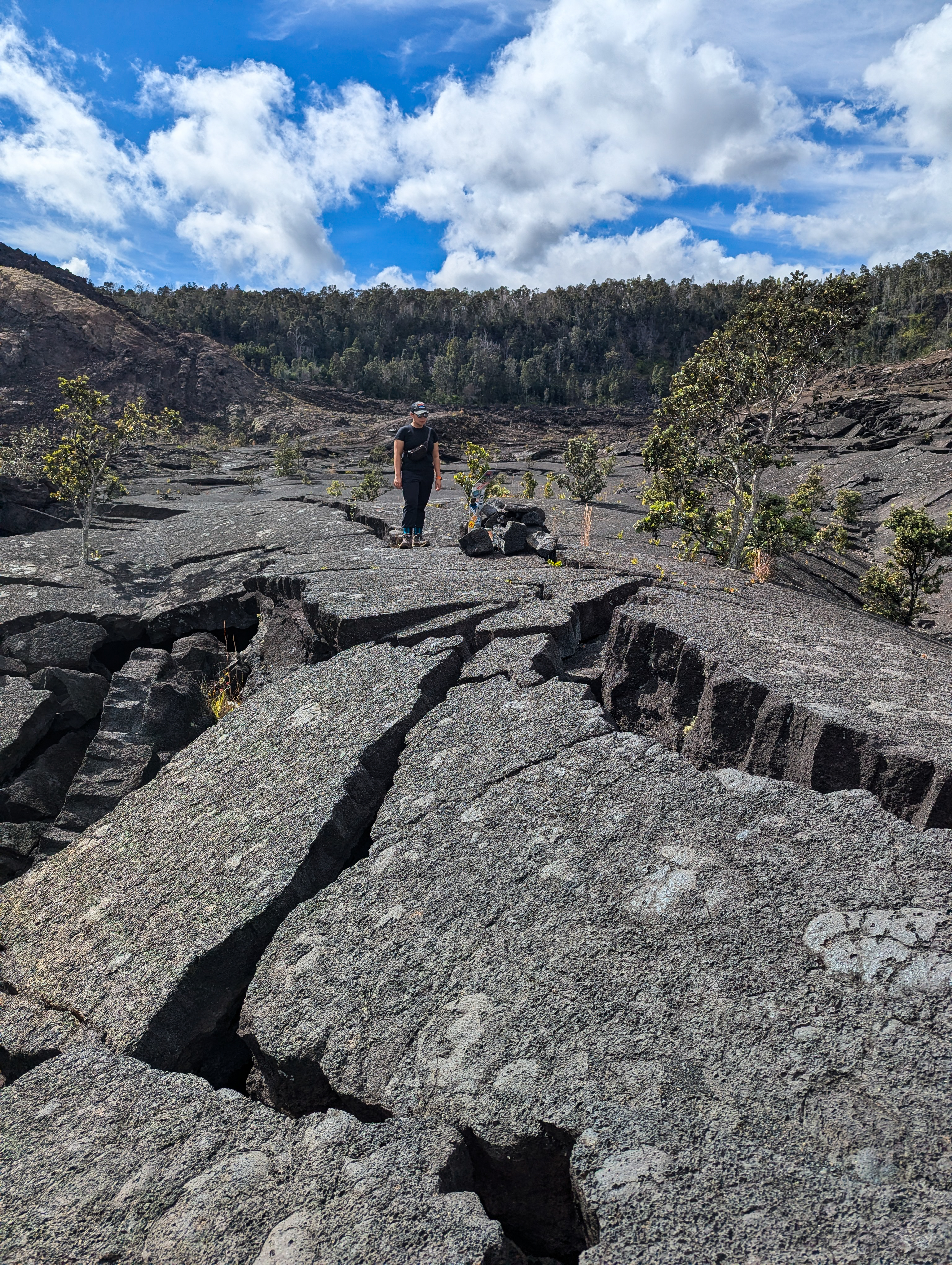


Kilauea had erupted just two months before we made this trip to Big Island, and about a month after I had visited with Mom, Dad, and Bub. While I wish I could have witnessed lava spewing live from Kilauea, it was also amazing to see Kilauea again in its aftermath. the crater floor had visibly changed from the new lava that pushed forth from Earth’s core in September. This majestic mountain had transformed itself, ever so slightly in its grand scheme through time, once again. its new surface still smoldered with the intensity of the effort. I can’t name another terrestrial life form that births itself, but I’m sure that it too would have to expend an enormous store of its energy to do so.
Kilauea Iki, being the smaller crater next to the HBIC (Head Bitch in Charge), remained in a stable state and hikeable. From the lookouts on the Crater Rim, the crater floor looks the way you might expect it to look, having burned itself out and hardened into rock– charred, dead, featureless. But hoofing it out 400 feet below on ground zero under the scorching Hawaiian sun revealed a terrain that holds its own surprises and mysteries.
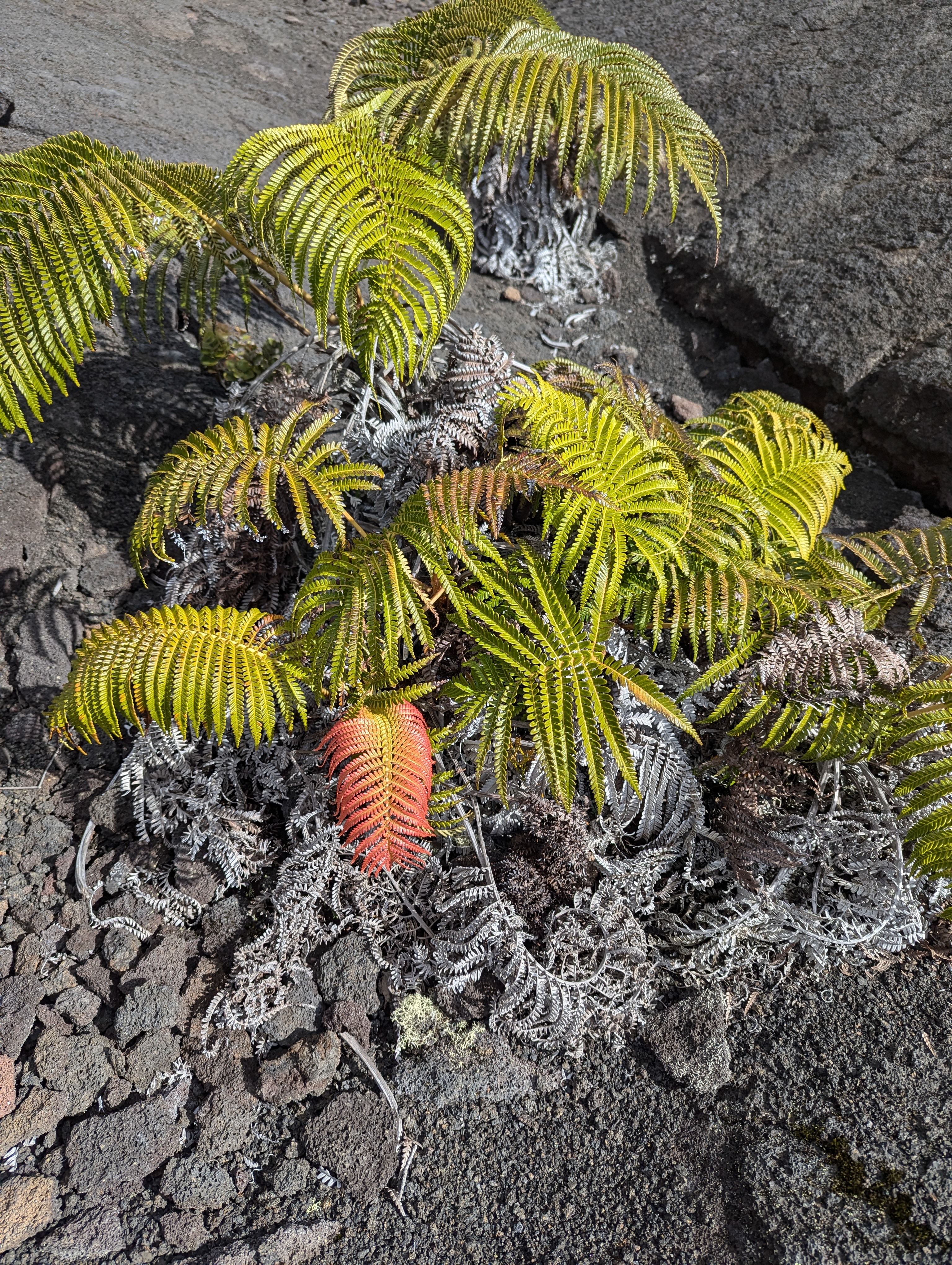
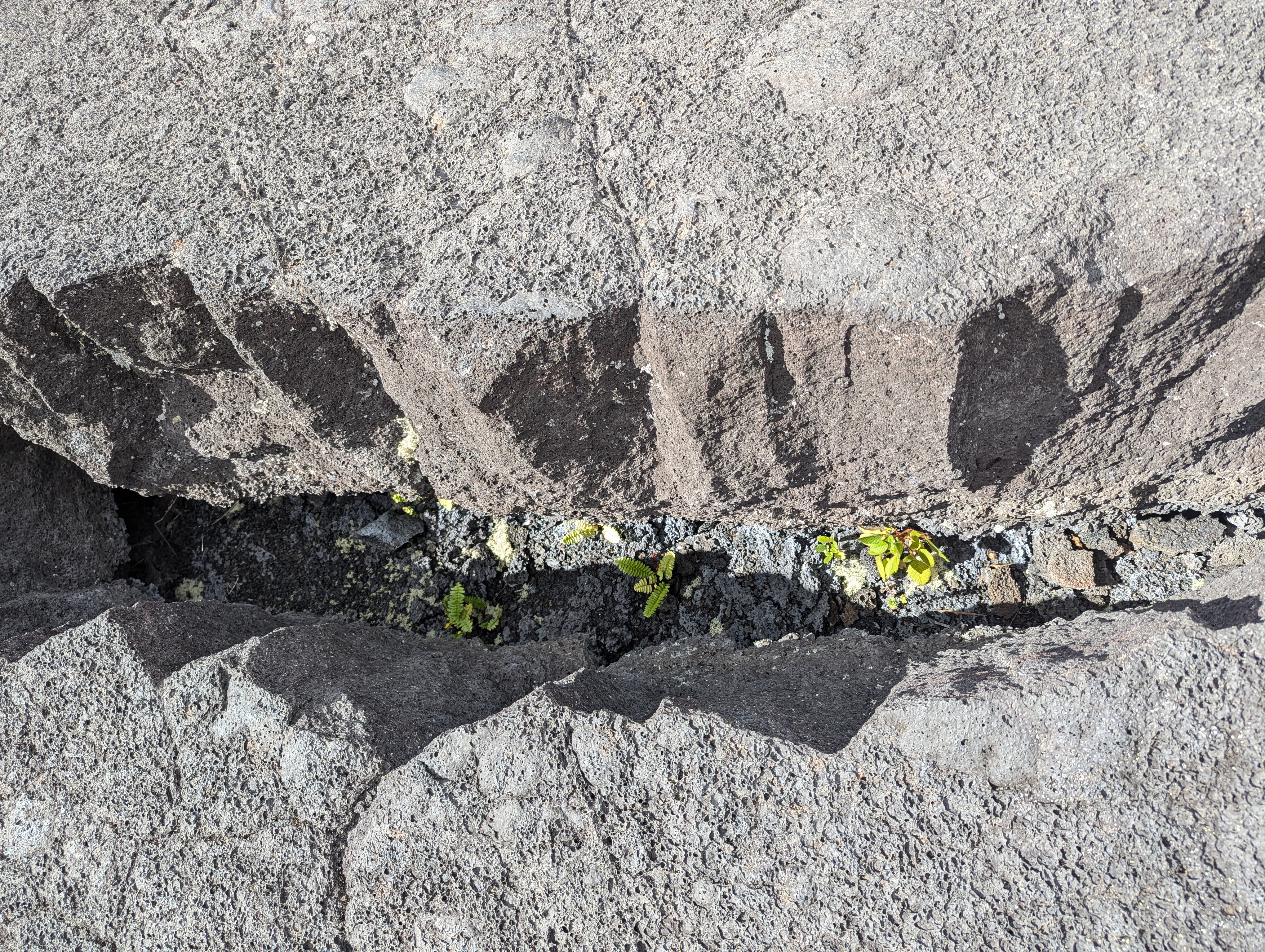
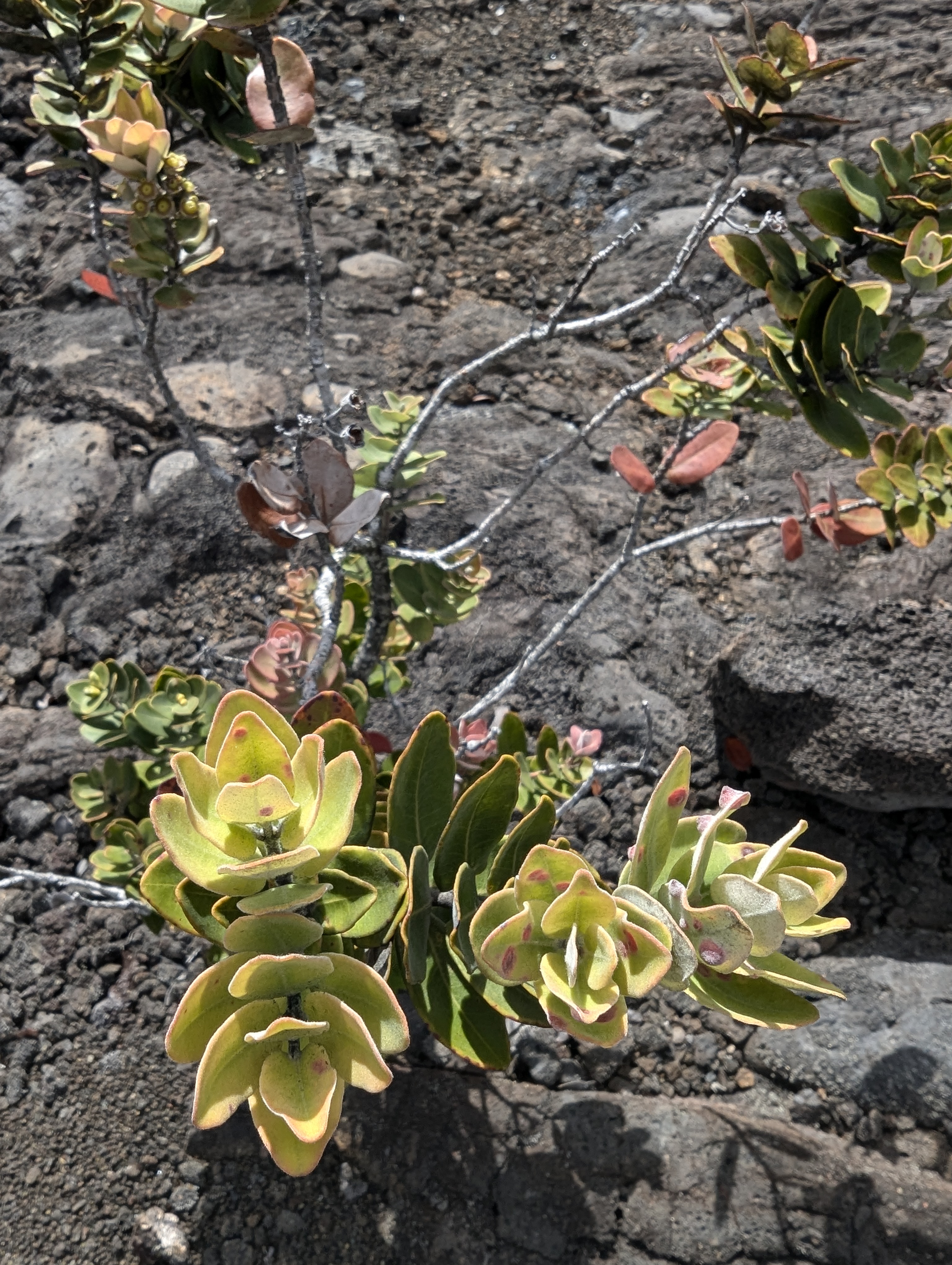
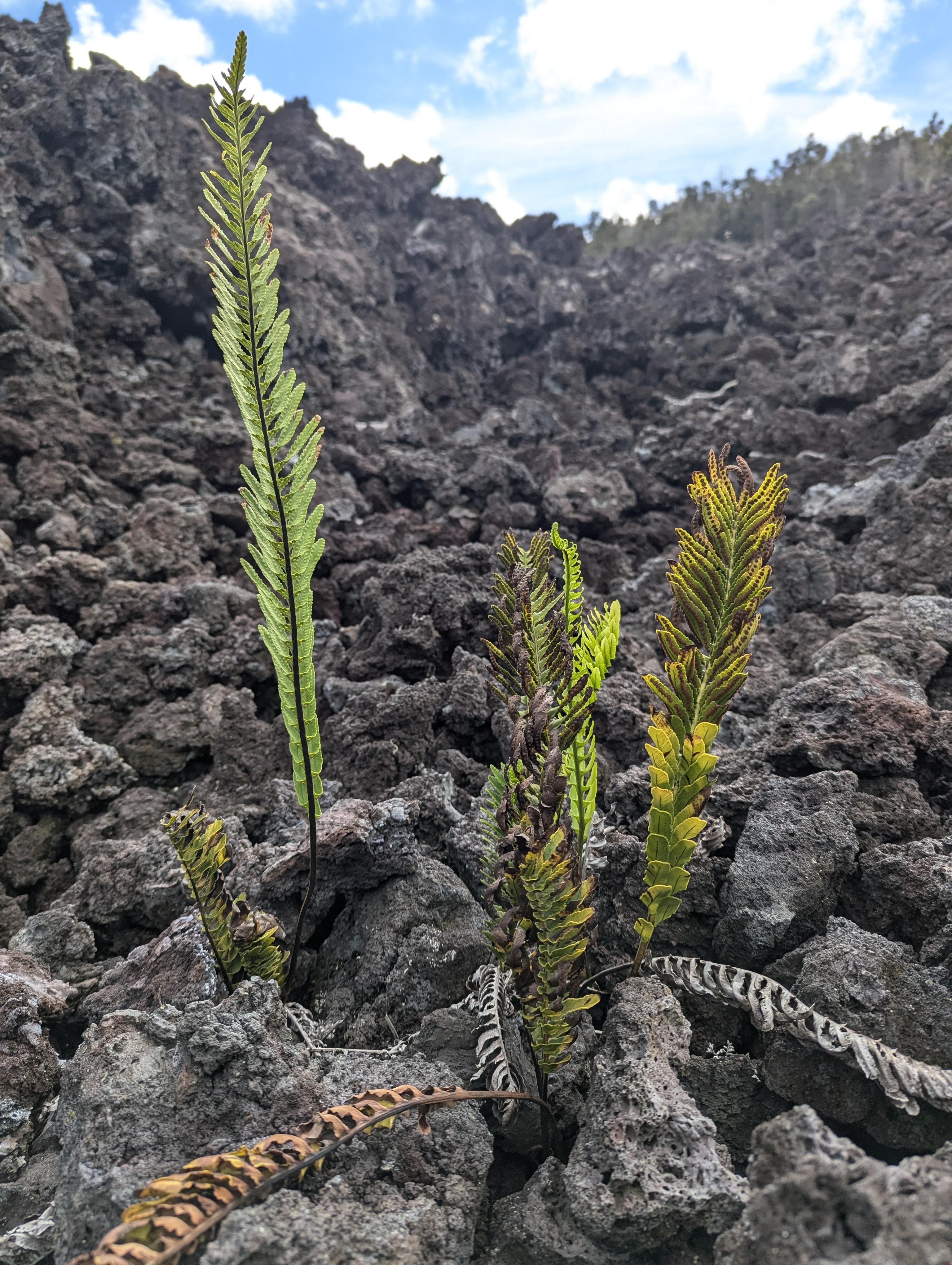
Plant life seemed to thrive, and then die, and rise again in the crust’s cracks. There was no evidence of animal life, but the many crevasses and crumbly piles that resemble the amalgam from rutted and sinkhole-laden city streets created plenty of potential shelter, burrows for small animals to keep in the cooler nights.
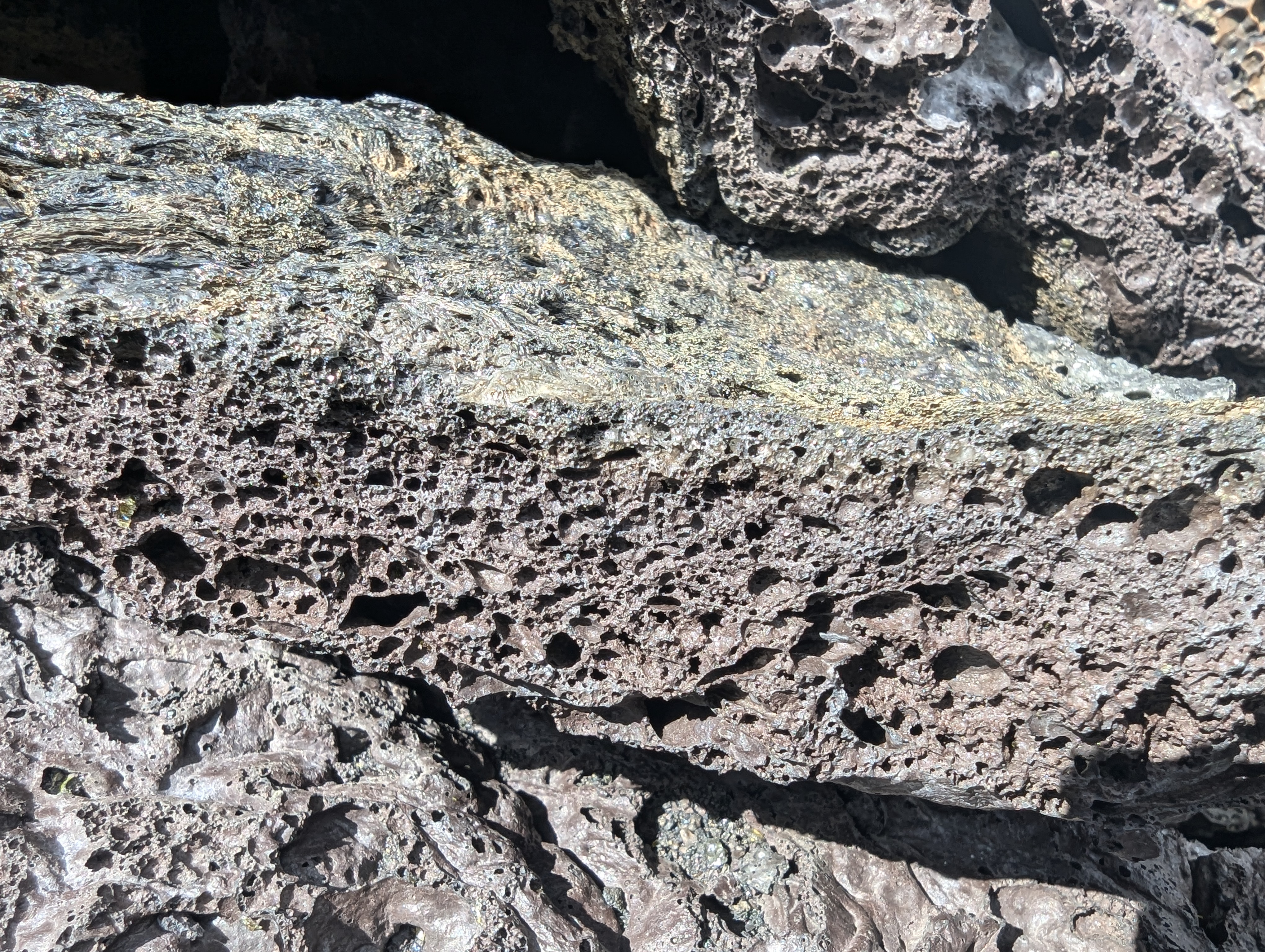
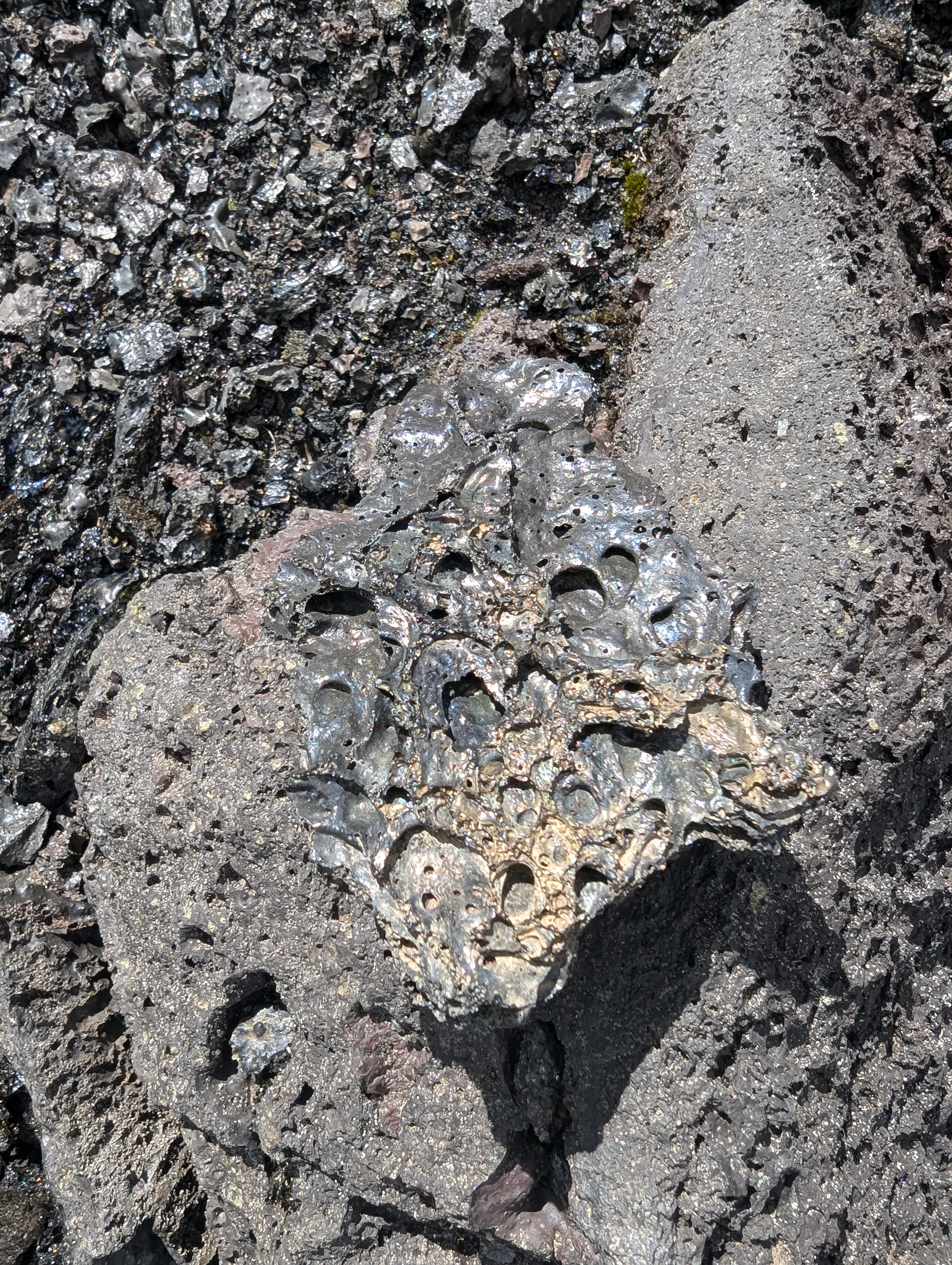
The rocks themselves held the most fascination. Much of the crust was rock so black that it seemed not to reflect any light at all. But then you would look and see bands of rainbow colors embedded in a cross-section or piles that glinted in metallic silver, bronze, and gold. There is no way that crater isn’t alive and teeming with life of some kind. We humans may not even recognize what’s there as life, but it felt as alive as if we were atop the rising and falling chest of an enormous breathing mammal.

 Tidepool Haikus